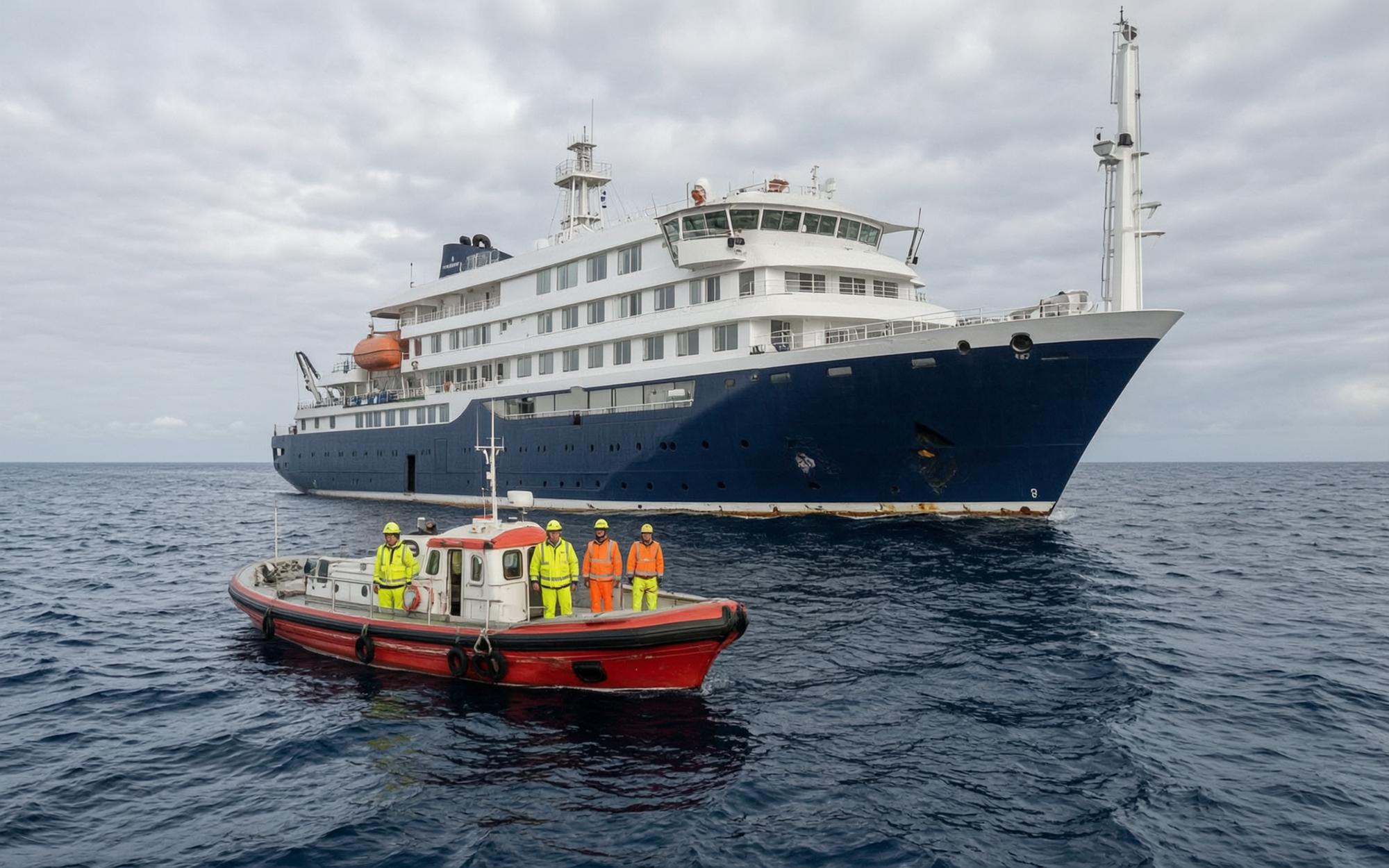
All eighteen American passengers who were aboard the MV Hondius cruise ship remain under federal quarantine while doctors and officials from the Centers for Disease Control and Prevention determine when they can safely return home.
During a Wednesday briefing, the CDC said the passengers are being encouraged to stay in quarantine through the full forty-two–day incubation period, which began on Monday, the day they disembarked from the ship.
Dr. David Fitter, the CDC’s incident manager for the hantavirus response, said interviews are still underway to assess how closely passengers were exposed to the Andes hantavirus while aboard the cruise. That evaluation is expected to continue at least through Thursday.
“Currently, there are no state or federal quarantine orders that have been drawn,” Fitter said. “The goal is to work with them for the best possible place for them.”
Two passengers have been tested for the Andes strain at the center of the outbreak. One passenger who developed symptoms and was sent to Emory University Hospital in Atlanta has tested negative.
In Nebraska, officials said one person who was initially treated in the University of Nebraska Medical Center’s Biocontainment Unit has been cleared to move from the facility to quarantine.
Dr. Stephen Kornfeld, a passenger on the cruise, told CNN on Wednesday that after testing “faintly positive” for hantavirus he has since tested negative and was moved from the Biocontainment Unit to quarantine.
At least seven other Americans who disembarked earlier are quarantining at home across multiple states. Local health departments are maintaining contact with them while they monitor for symptoms.

“We are working very closely with state and local health departments and the passengers that are home to ensure that they understand what is expected for them to monitor themselves,” Fitter said. That may include isolating in specific rooms and wearing N95 masks.
Citing privacy concerns, CDC officials declined to say how many people in the United States are currently being monitored, including passengers and any contacts.
For now, the CDC only recommends testing individuals who have both exposure to hantavirus and symptoms. Fitter confirmed that a blood test specific to the Andes strain has been validated, and a PCR test is available but not yet in routine use for patient care.
As of Wednesday, eleven cases of hantavirus infection have been reported worldwide, with eight confirmed. All occurred among passengers or crew members aboard the Hondius. No Americans have received conclusive positive results.
Three people from the ship have died, including a Dutch couple believed to have been exposed while traveling in South America.
Every documented case in the outbreak involves the Andes strain, which is the only hantavirus known to spread from person to person. Although some reports suggest casual transmission, scientists generally agree that it does not spread easily.
In most cases, hantavirus infection occurs when a person breathes or ingests particles from rodent urine or droppings carrying the virus. Large outbreaks are rare, and only an estimated two to five percent of Andes cases result from person-to-person spread.
Join the Discussion
COMMENTS POLICY: We have no tolerance for messages of violence, racism, vulgarity, obscenity or other such discourteous behavior. Thank you for contributing to a respectful and useful online dialogue.