WHAT YOU NEED TO KNOW
- Hilary Tesluck’s kratom use climbed from four capsules to as many as 100 per day, accompanied by severe weight loss and declining work performance.
- After unsuccessful treatment in 2020, Tesluck found support through an online recovery meeting in 2021 and later recovered from relapses involving kratom and 7-OH.
- Kratom reports to U.S. poison centers rose about 1,200% from 2015 to 2025, reaching a record 3,434.
- The FDA says kratom drugs are not approved, while state rules governing age restrictions, labeling and product standards vary widely.
Kratom related reports to U.S. poison centers rose about 1,200% from 2015 to 2025, reaching a record 3,434, according to the Centers for Disease Control and Prevention. For Hilary Tesluck, dependence began years before that peak.
Tesluck, now 30 and living in Michigan, first tried kratom capsules in 2017 at age 21. She now raises awareness about kratom addiction and helps support people in recovery.
A friend introduced Tesluck to the substance because she experienced anxiety and took prescription medication for it. “I wanted to be more holistic and natural in what I was consuming,” she told Fox News Digital.
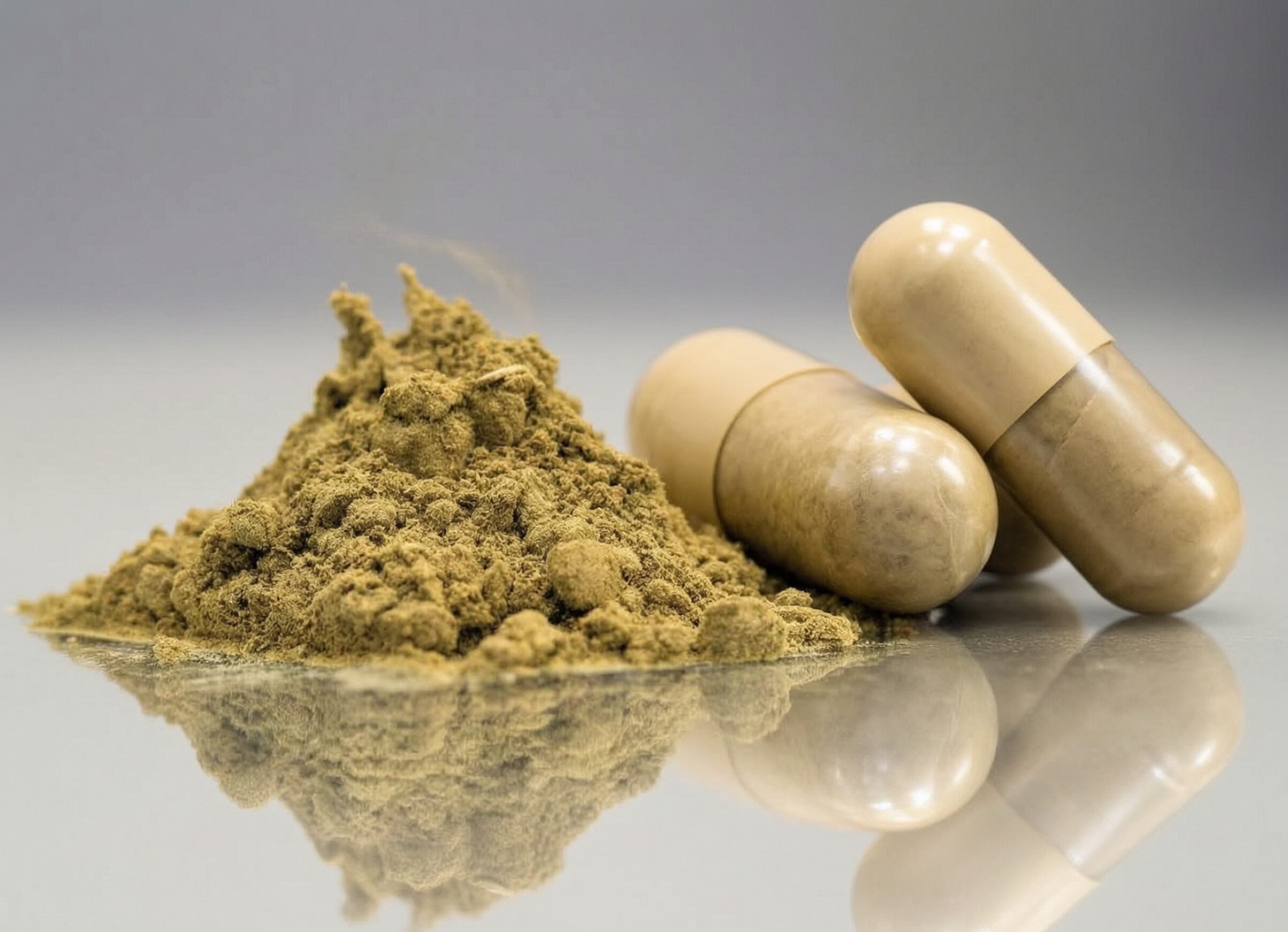
Tesluck said she does not remember seeing dosing recommendations on the label. After her friend suggested four capsules, the undergraduate student initially experienced more energy, confidence and productivity while conducting research and tutoring.
Her consumption gradually increased from four capsules to as many as 100 per day. “Very slowly, over time, I had to take just one more capsule or just one more dose, and then went all the way up to 100,” she said.
As her intake climbed, Tesluck said her ability to function deteriorated. Her performance at work suffered, she lost nearly 40 pounds and her body became so depleted that she struggled to stand in the shower.
Her belief that kratom was natural and legal made the dependence harder to recognize and accept. About a year and a half into her addiction to leaf kratom, she realized that she needed help.
When Tesluck sought treatment in 2020, she said the facility’s urine screening did not detect her kratom use. Staff members did not understand why she was there, leaving her feeling humiliated and prompting her to leave after only a few days.
Tesluck returned to kratom, but found meaningful support in 2021 through an online recovery meeting. “It changed everything for me to hear other people telling my story for the first time,” she said.
She relapsed in 2023 after her grandmother died. Tesluck later experienced a separate relapse involving concentrated 7-OH following the death of her cat and the end of a relationship on the same night.
7-OH, or 7-hydroxymitragynine, occurs naturally in trace amounts in kratom, while concentrated products contain far higher levels. The FDA says 7-OH and mitragynine, kratom’s main active compound, act on opioid receptors and can contribute to dependence.
“The 7-OH was very strong,” Tesluck said. She took a leave of absence and returned to her recovery group, whose members helped her stop using the concentrated product after several months.

Tesluck considers leaf kratom and concentrated 7-OH to be “one problem at two strengths.” Mac Haddow, senior fellow on public policy for the American Kratom Association, disputed that characterization and said exposure from the body’s conversion of mitragynine is not equivalent to concentrated products.
Haddow acknowledged that kratom can cause physical dependence and that some consumers have reported addiction. He supported accurate warning labels, stronger enforcement, excise taxes to fund enforcement and limiting access to people ages 21 and older.
Regulation varies by state, including different rules for age limits, product standards and bans. Florida prohibits providing kratom products to anyone under 21, while Washington’s health department says unscheduled kratom products there largely lack age restrictions, labeling standards and ingredient testing requirements.
The FDA says it has not approved any kratom drugs, and kratom cannot legally be marketed as a dietary supplement or added to conventional foods. Federal authorities seized approximately 73,000 concentrated 7-OH products valued at roughly $1 million from three Missouri firms in December 2025.
Tesluck urged consumers to notice when kratom begins controlling their routines, such as worrying about running out or planning around smoke shop hours. She experienced reduced appetite, weight loss, hair loss, sedation, numbness and irritability.
“If I took less than what I was taking, I would feel even worse and sicker,” she recalled. Tesluck said she became “a zombie shell of myself overall” and no longer felt like the same person.
Now describing herself as being in long term recovery from kratom and 7-OH addiction, Tesluck serves as executive director of End Kratom Addiction. The Virginia nonprofit raises awareness of kratom related risks, advocates for stronger regulation and coordinates resources for families and people still experiencing addiction.
Are you feeling overwhelmed or hopeless right now? Have you been withdrawing from people or activities you usually enjoy? Are you having thoughts about hurting yourself, or feeling like things will never improve?
You do not have to handle those feelings alone. Support is available, and talking to someone can make a difference. You can reach out to the 988 Suicide & Crisis Lifeline by calling or texting 988, or by chatting online at 988lifeline.org. Trained counselors are available 24 hours a day to listen and help.
If you believe someone is in immediate danger, call emergency services right away. Even a small step, like reaching out to a trusted friend, family member, or professional, can help create a path forward.
Join the Discussion
COMMENTS POLICY: We have no tolerance for messages of violence, racism, vulgarity, obscenity or other such discourteous behavior. Thank you for contributing to a respectful and useful online dialogue.